
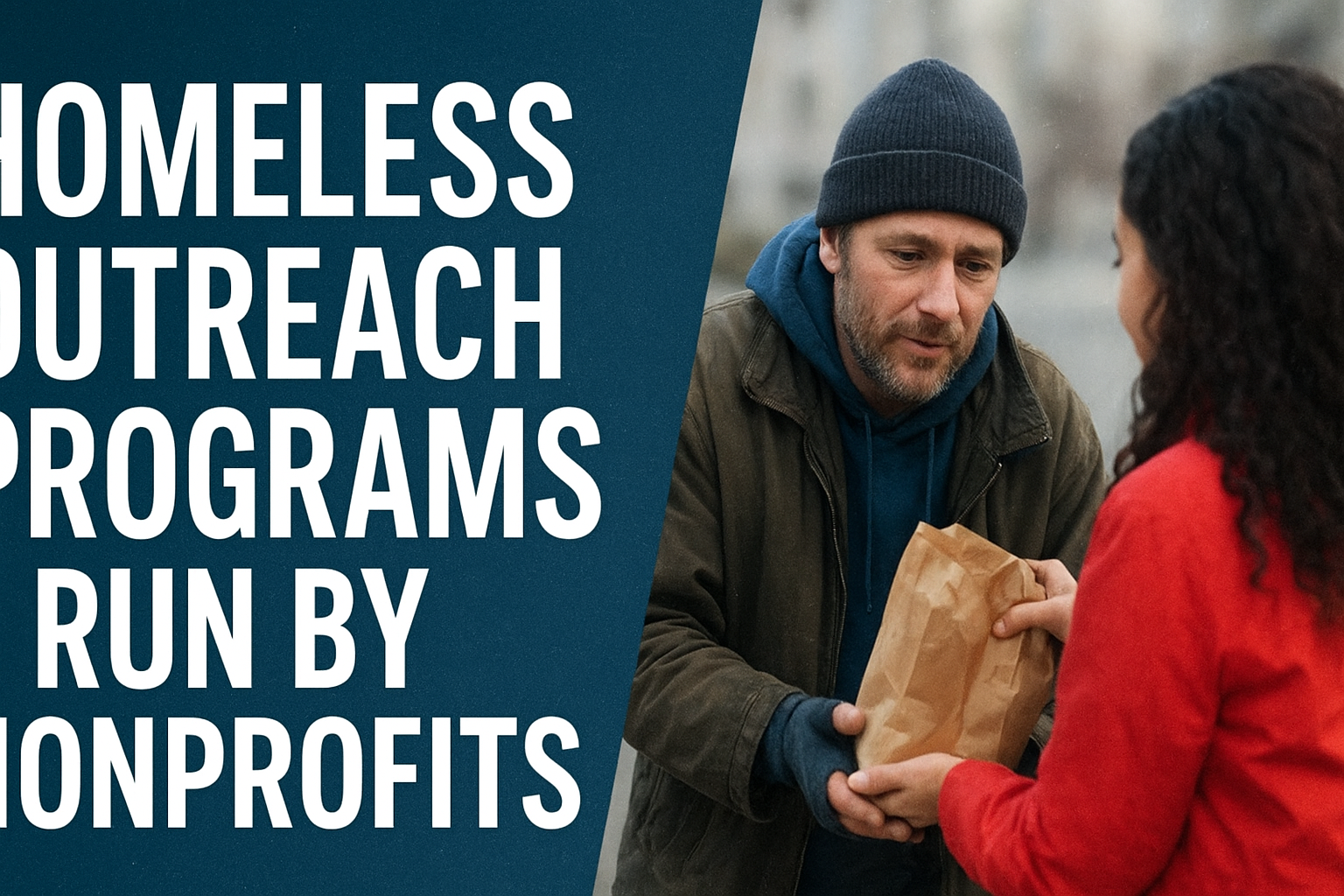
Homeless outreach programs connect people and families experiencing homelessness with services that can help them rebuild their lives. Many homeless people do not stay in shelters. They sleep in parks, cars, abandoned buildings, or makeshift camps. Nonprofit organizations comes to help them and offer several assistance and support. Read below to know how to find homeless outreach programs run by nonprofits near you.
What Are Homeless Outreach Programs?
Homeless outreach programs are community-based services to help people experiencing homelessness or who may not find help at shelters or service centers. These programs offered basic medical care, mental health support, housing referrals, case management, crisis intervention and more.
Major Services Offered by Homeless Outreach Programs
Outreach programs for people experiencing homelessness provide direct support to those living on the streets, in vehicles, abandoned buildings, and other unsafe locations. These programs focus to provide immediate help while also helping them for long-term housing stability. Here are some important services offered by homeless outreach programs.
Street Outreach and Engagement
One of the core services is street outreach and engagement. Outreach workers visit public areas, and sidewalks to talk with people who may feel disconnected from traditional support systems. They offer conversation, guidance, and respect. This early interaction builds trust and helps workers understand the individual’s situation, needs, and readiness to receive services.
Distribution of Basic Survival Supplies
Another essential service is the distribution of basic survival supplies. Relief teams bring food, bottled water, hygiene kits, blankets, socks, and first-aid supplies. For people living outdoors, these items are not only useful but also protect their health and safety, especially during extreme weather conditions.
Help Finding Shelter
Community outreach programs also help people find safe shelter. Workers check availability at local shelters, help with intake forms, and often provide transportation. During extreme heat or cold, they guide people to warming centers, cooling stations, or emergency shelters. Some organizations even help people to get motel or hotel vouchers when shelters are full or unsafe due to special circumstances.
Finding Affordable Housing Solutions
Housing search is a critical part of community outreach work. Teams help unsheltered individuals find stable housing by completing applications, locating affordable housing options, and collaborating with landlords. They also guide people through programs such as rapid rehousing or permanent supportive housing. Many people experiencing homelessness struggle with paperwork, identification barriers, or previous evictions, so housing support is often a long-term process.
Case Management
Case management is another important service. Community outreach programs provide ongoing one-on-one support to help people regain stability. Case managers help clients set goals, manage paperwork, apply for benefits, find employment programs, and stay connected with community resources. Ongoing support helps reduce the risk of re-experiencing homelessness.
Healthcare
Healthcare is also a vital community service. Many programs collaborate with mobile medical teams to provide basic medical care, wound treatment, medication support, and referrals to clinics. Community workers also help clients access mental health services, which is essential for those living with untreated conditions such as depression, anxiety, or trauma. In crisis situations, community teams help people connect with psychiatric care, substance abuse treatment, or emergency services.
ID Assistance
ID assistance is another critical service. Without identification, people cannot apply for jobs, housing, healthcare, or benefits. Community workers help clients obtain birth certificates, state IDs, and Social Security cards. This step removes one of the biggest barriers to progress.
Transportation
Transportation is often overlooked, but it is extremely important. Community outreach programs offer bus passes, transportation to shelters, rides to medical appointments, and transportation to job interviews or visits to government offices. This helps clients access resources that would otherwise be out of reach.
Legal Support
Many community outreach programs for people experiencing homelessness also offer legal support or partner with legal aid groups. Clients may need help clearing eviction records, addressing minor legal issues, or obtaining protective orders in domestic violence cases. Legal assistance can open doors that were previously closed.
Follow-Up Support
Finally, follow-up support is a critical part of community outreach work. Once individuals move into housing, community outreach workers continue to contact them, helping them stay connected to community resources and ensuring they receive the support they need to remain stable. This long-term relationship helps prevent future homelessness.
Nonprofits Running Homeless Outreach Programs
Outreach programs play a vital role in connecting people experiencing homelessness with food, shelter, medical care, and long-term housing. Many people experiencing homelessness don’t go to shelters or service centers, so nonprofit organizations reach out to them directly. Here is a detailed list of the leading nonprofit organizations that run outreach programs in the United States, along with the services they offer.
1. The Salvation Army
The Salvation Army runs outreach teams in many cities. Workers visit homeless encampments, sidewalks, and public spaces to provide:
- Food and water
- Hygiene kits
- Shelter placement
- Emergency motel vouchers
- Case management
They also connect people with addiction treatment programs and long-term housing.
2. Catholic Charities USA
Catholic Charities operates one of the largest outreach networks in the country. Teams help people experiencing homelessness with:
- Basic needs
- Referrals to temporary shelters
- Rapid rehousing
- Housing search
- Mental health referrals
Many locations offer mobile community support vans that deliver supplies.
3. Volunteers of America (VOA)
VOA’s community support programs assist people sleeping rough or in cars. Services include:
- Daily community support walks
- Transportation to shelters
- Referrals to job training
- Housing assessments
- Access to medical care
VOA also manages transitional housing and veterans’ housing programs.
4. Society of Saint Vincent de Paul
St. Vincent de Paul community support volunteers visit people on the streets and in encampments. They provide:
- Hot meals
- Clothing and blankets
- Connections to emergency shelters
- Limited rental assistance
- Motel vouchers (in some cities)
The organization works closely with parishes and community partners.
5. Coalition for the Homeless
This nonprofit organization is known for its mobile outreach services in major cities. Its teams specialize in:
- Crisis Intervention
- Mental Health Support
- Transportation to Safe Shelters
- Enrollment in Housing Programs
They respond to nighttime calls from homeless individuals in need.
6. PATH (People Helping the Homeless)
PATH focuses on providing priority housing assistance. They help homeless individuals with:
- Street Outreach
- Housing Case Management
- Supported Permanent Housing
- Connections to Medical and Mental Health Care
They primarily operate on the West Coast.
7. Rescue Mission Network
Local rescue missions implement robust community outreach programs. Services often include:
- Food Truck Outreach
- Mobile Showers
- Clothing Distribution
- Shelter Placement
- Referrals for Addiction Recovery
Many missions also operate emergency shelters and job training centers.
8. Family Promise
Family Promise focuses on families with children. Community outreach staff assist families living in cars, motels, and other precarious housing with:
- Emergency shelter
- Case management
- Stable housing options
- Transportation
- Childcare connections
They work through a network of local congregations.
9. The Dream Center
The Dream Center operates community outreach vans and mobile ministries serving people experiencing homelessness. Services include:
- Hot meals
- Hygiene kits
- Prayer support
- Shelter referrals
- Relocation assistance
Community outreach activities are held weekly in many cities.
10. United Way (2-1-1 Network)
While not a traditional community outreach team, the United Way operates the 2-1-1 Network, which connects homeless individuals with:
- Street outreach teams
- Available shelter beds
- Motel voucher programs
- Medical assistance
- Mental health crisis teams
Many local United Way affiliates also fund direct community outreach programs.
11. YWCA
The YWCA offers community outreach services for women, survivors of domestic violence, and single mothers. Services include:
- Safe housing placement
- Referrals to domestic violence shelters
- Rapid rehousing programs
- Emotional support
- Legal advocacy
Some locations operate mobile community outreach teams.
12. Red Cross (Disaster Relief)
The American Red Cross provides community outreach services during emergencies and natural disasters. It assists homeless and displaced people with:
- Emergency shelter
- Disaster meals
- First aid
- Social work
- Temporary housing support
It collaborates with local nonprofit organizations to provide long-term assistance.
13. Homeless Outreach Team (HOT) Programs
Many cities partner with nonprofit organizations to operate HOT teams, which focus on:
- Street outreach
- Camp support
- Mental health support
- Housing assistance
These teams typically include social workers, peer support specialists, and health professionals.
14. Local Religious Organizations
Churches, mosques, temples, and religious groups often offer assistance programs, both informal and formal. Many offer:
- Meal services
- Clothing closets
- Shelters
- Referrals to shelters
- Motel vouchers
Examples include Lutheran Social Services, assistance from the United Methodist Church, and Baptist community programs.
15. Mobile Health Clinics
Many nonprofit organizations operate mobile support clinics for people experiencing homelessness, offering:
- Health screenings
- Wound care
- Vaccinations
- Substance abuse counseling
- Mental health check-ups
These clinics serve people who are unable to go to hospitals or offices.
How to Find Nonprofit Homeless Outreach Programs Near You
Below are proven ways to find nonprofit social assistance programs and resources for housing, shelter, food, medical help, or long-term support.
Use the central hotline or referral services (such as 211).
A good first option is to call or contact a local referral hotline. In many U.S. cities and counties, the United Way 211 network (short code 211) connects people with homeless shelters, social service teams, emergency housing, food assistance, mental health services, and more.
By calling or texting 211, trained specialists will assess your situation and help you find appropriate local nonprofits or government programs.
If you are unsure whether 211 exists in your area, search online for “211 + your city/county.” Many local United Way or community service groups operate the line.
Use Online Directories of Shelters and Resources
Several online directories list shelters, social service centers, transitional housing, food banks, and related services by city or state.
The U.S. Department of Housing and Urban Development (HUD) offers the “Find Shelter” tool: enter your city or zip code to find shelters, health clinics, and nonprofit organizations that offer assistance.
Independent directories such as ShelterListings.org compile thousands of entries, including emergency shelters, day centers, transitional housing, and low-cost housing.
Other resources, such as the Homeless Shelter Directory or community “shelters near me” websites, can also be helpful, though you should check the listings individually.
Always call ahead to verify availability and policies (ID, intake hours, special requirements) rather than assuming the listed services are open at that time.
Contact Local Nonprofit Organizations Directly
Large nonprofit organizations and faith-based programs often implement community outreach programs in many cities. For example, groups like the Salvation Army operate homeless shelters, meal programs, community outreach teams, and housing support services.
If you know of any local charities, faith-based organizations, or community action agencies, contact them directly by phone, through their website, or in person. Staff or volunteers may be able to connect you with community outreach services that are not widely advertised.
Use Public Housing Resources
In many communities, local agencies coordinate homeless services, shelters, and housing assistance through centralized coordinated entry systems. These systems typically link shelters, transitional housing, rental assistance, and community outreach services, helping you find the right resources for your needs.
HUD’s “Find Shelter” tool can help you locate coordinated entry providers in your area.
You can also contact your local public housing agency or housing authority. They sometimes manage or are aware of emergency housing and community outreach services, especially for people at risk of homelessness.
Contact Health Programs
Some nonprofit organizations specialize in medical or mental health care for people experiencing homelessness. For example, the National Health Care Council for the Homeless (HCH) helps connect people experiencing stable housing with medical and support services; it provides provider directories by state.
Even if you only need medical care, contacting these programs may also result in help with housing, housing support, or referrals to comprehensive community outreach teams.
Check with Community Action Agencies or Local Social Services Departments
In rural areas, or where large nonprofit organizations are limited, local community action agencies often offer emergency assistance or community outreach services. According to the National Coalition for the Homeless, community action agencies or small nonprofits may be the best option when large nonprofits are unavailable.
Contacting municipal social services offices, local religious organizations, or grassroots community groups can uncover programs that might not otherwise be documented online.
Be Prepared when You Contact Services
When calling or visiting social service programs, having some basic information on hand can be helpful:
- Your current situation (homeless, shelter, motel, car, etc.)
- Whether you have children, pets, or other dependents
- Any immediate needs (current shelter, food, medical assistance)
- Identification, if you have it; keep in mind that many shelters and social service programs can help even without ID.
Flexibility: Many programs operate on a first-come, first-served basis or have limited space.
Given the high demand, it is helpful to call several resources rather than relying on just one.
Final Thoughts
Nonprofit social service programs for people experiencing homelessness are essential to every community. They provide dignity, support, and practical help to those who have nowhere else to turn. Their work is critical to recovery and long-term housing solutions.
